Methane Slip in LNG Shipping 2026: Regulatory Risks, Commercial Implications, and Emerging Solutions
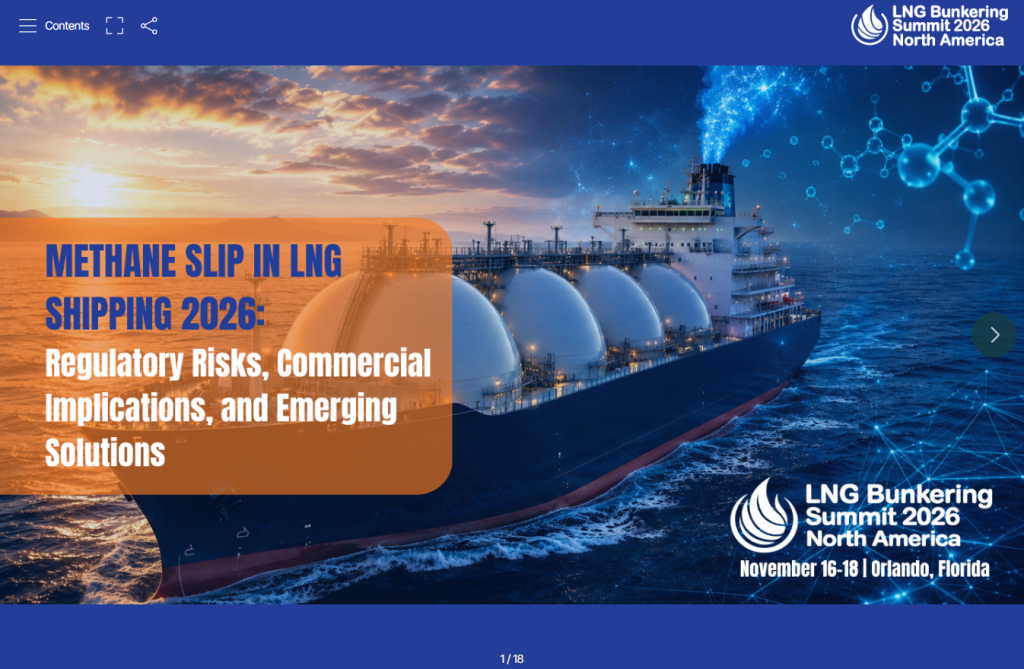
Methane slip has become one of the biggest challenges facing LNG-fueled shipping, with growing pressure from regulators, charterers, financiers, and emissions frameworks placing vessel greenhouse gas performance under greater scrutiny. As LNG adoption accelerates, understanding and mitigating methane emissions is becoming essential for maintaining compliance, competitiveness, and long-term fleet value.
This report, Methane Slip in LNG Shipping 2026: Regulatory Risks, Commercial Implications, and Emerging Solutions, examines the latest regulatory developments, IMO emissions measurement initiatives, and breakthrough technologies helping shipowners reduce methane slip and strengthen LNG's environmental performance.
Download the Full Report to Learn:
- Why methane slip matters: The environmental, regulatory, and commercial implications of methane emissions as LNG-fueled fleets continue to expand.
- How regulation is changing: The latest IMO developments, the shift toward measured emissions, and what evolving greenhouse gas frameworks mean for operators and LNG stakeholders.
- Which technologies are leading the way: How engine upgrades, catalyst systems, and monitoring solutions are delivering methane-slip reductions of up to 94%.
Download the report today to understand the risks, evaluate the solutions, and prepare your fleet for the next phase of LNG-powered shipping.
In Partnership With:

QUESTIONS?
Address: IQPC Ltd, 129 Wilton Road,
London SW1V 1JZ
Telephone: +44 (0) 113 210 042
Fax: 44 (0) 207 368 9301
Email: enquire@iqpc.co.uk

©2026 IQPC. All rights reserved.