Report | IMO Net-Zero Framework vs. Liberia Proposal: Implications for LNG & Global Marine Fuel Markets | Featuring Insights from Ryan Harb
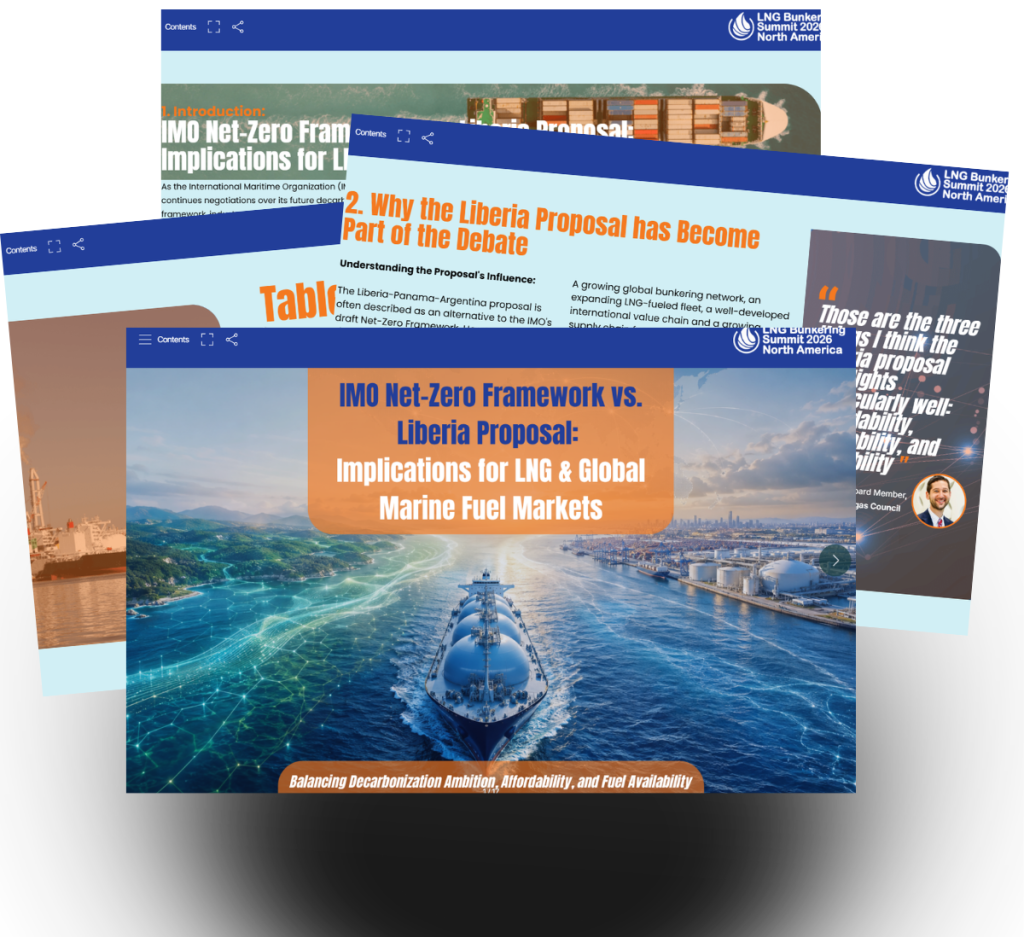
As the IMO's Net-Zero Framework takes shape, growing attention is being paid to an alternative proposal from Liberia, Panama, and Argentina that could influence its final design. For LNG stakeholders, the debate extends far beyond regulation, with implications for fuel competitiveness, compliance costs, renewable methane pathways, and investment across the global marine fuel value chain.
In this exclusive report, Ryan Harb, Board Member at the American Biogas Council, examines the key differences between the two proposals, why a compromise framework may be the most likely outcome, and what it could mean for LNG, bio-LNG, renewable natural gas (RNG), and e-methane pathways.
Download the Full Report to Learn:
- How the competing frameworks differ: Understand the key distinctions between the IMO's Net-Zero Framework and the Liberia proposal, including their approaches to emissions reduction, affordability, fuel availability, and infrastructure readiness.
- What the debate means for LNG: Explore Ryan Harb's insights on how future greenhouse gas intensity targets, carbon pricing mechanisms, lifecycle emissions accounting, and methane regulations could influence LNG's role in the global marine fuel mix.
- The outlook for bio-LNG and renewable methane: Discover how RNG, bio-LNG, and e-methane could leverage existing LNG infrastructure, and why certification, lifecycle accounting, and carbon-intensity methodologies will be critical to future adoption.
- What happens next: Gain expert analysis on the most likely regulatory outcomes, the prospect of a compromise framework, and the developments LNG stakeholders should be watching most closely.
Download the report today to understand how evolving IMO regulations could shape LNG's long-term role in shipping and what a potential compromise framework may mean for the future of marine fuel markets.
In Partnership With:

QUESTIONS?
Address: IQPC Ltd, 129 Wilton Road,
London SW1V 1JZ
Telephone: +44 (0) 113 210 042
Fax: 44 (0) 207 368 9301
Email: enquire@iqpc.co.uk

©2026 IQPC. All rights reserved.