
From Strategy to Execution: Connecting APAC to Advance Safe, Efficient and Sustainable Offshore DecommissioningMarch 18 - 19, 2027 l Perth, Australia
Circularity in the Decommissioning of Petroleum Activities
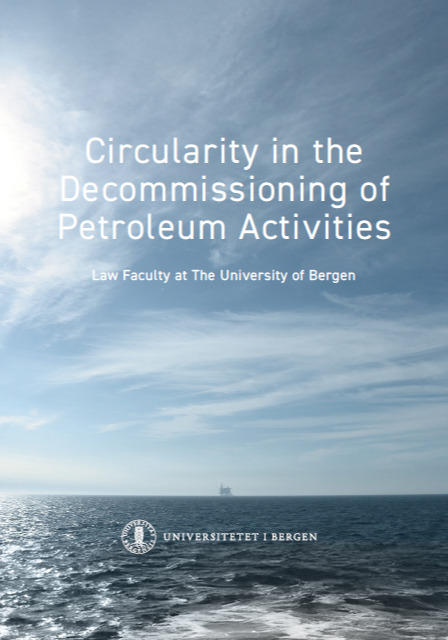
Circularity in the Decommissioning of Petroleum Activities
A free report by Offshore Norge and the University of Bergen, shared with Offshore Decommissioning APAC 2027
North Sea operators already recycle 95–98% of their offshore installations, but very little of it gets reused. This report explains why. It compares decommissioning rules in Norway, the UK, the Netherlands and Australia, and sets out what regulators and industry can do about it.
What's inside
- Four regimes compared.
- How each country handles decommissioning plans, deadlines and approvals
- The international framework. UNCLOS, the London Protocol, OSPAR, the Basel Convention and EU law
- Disposal options. Reuse, repurposing and upcycling of installations, including for hydrogen production
- Practical bottlenecks. Heavy-lift capacity, reception yards and timing
- APAC focus. NOPSEMA's proactive approach, Australia's 2024 Decommissioning Roadmap and CODA's role
- Recommendations. Actions for regulators and for industry
The six barriers to reuse
- Few concrete requirements for circularity
- Unclear liability after an installation changes hands
- Strict export controls on decommissioned equipment
- Reuse often costs more than disposal
- No established secondary market
- Contract terms that block information-sharing
Who should read it
- Operators and asset owners
- Regulators and policymakers
- Decommissioning, EPC and heavy-lift contractors
- Disposal yards, recyclers and repurposing specialists
- Legal, commercial and sustainability teams
Please note: That all fields marked with an asterisk (*) are required.
In Partnership With:

QUESTIONS?
Contact us via email at enquiry@iqpc.com.sg.

©2026 IQPC. All rights reserved.


