11-13th May, 2027
| Amsterdam
Exclusive Industry Insights 2026 | Reports, Whitepapers, Fact Sheets & More
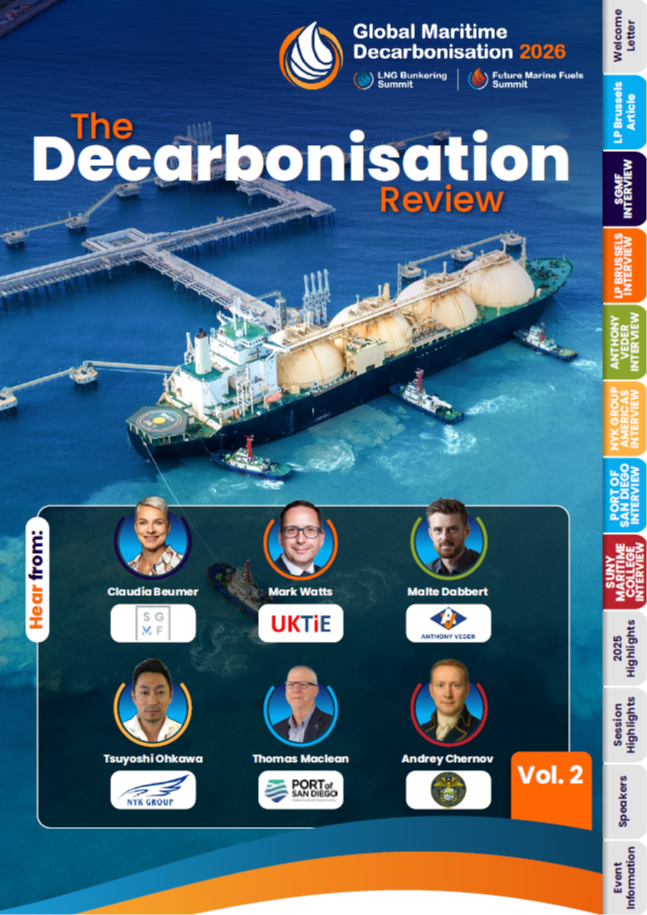
Interactive Magazine | The Decarbonisation Review | Volume 2
Clear Thinking for Maritime Decarbonisation in an Uncertain World
Global shipping is under pressure to decarbonise; yet regulatory clarity remains elusive. The Decarbonisation Review Vol. 2 delivers concise, expert insight into how the industry is responding now, despite delayed IMO decisions, fragmented regional rules, and rising compliance costs. Featuring perspectives from policymakers, shipowners, fuel specialists, ports, and academia, this edition focuses on what is commercially viable today, where risk is emerging, and why collaboration across the value chain is no longer optional.
Download to learn more about:
- How industry leaders are managing IMO uncertainty, EU ETS, and FuelEU Maritime
- Which fuel pathways and infrastructure investments make sense now, and which still carry risk
- Why collaboration across shipping, bunkering, ports, and finance is critical to accelerate decarbonisation
Expert Contributors Include:
- Mark Watts, Director, LP Brussels, previously CEO of the UK, Transport in Europe and former Two-Term Member of the European Parliament
- Claudia Beumer, Membership and Communications Manager, SGMF
- Malte Dabbert, Business Development Manager, Anthony Veder
- Tsuyoshi Ohkawa, Vice President of Business Development at NYK Group Americas
- Thomas Maclean, Policy Program Director, Port of San Diego
- Andrey Chernov, Adjunct Professor, SUNY Maritime College
Download The Decarbonisation Review Vol. 2 and gain the insight industry leaders are using to navigate risk, regulation, and fuel strategy today.
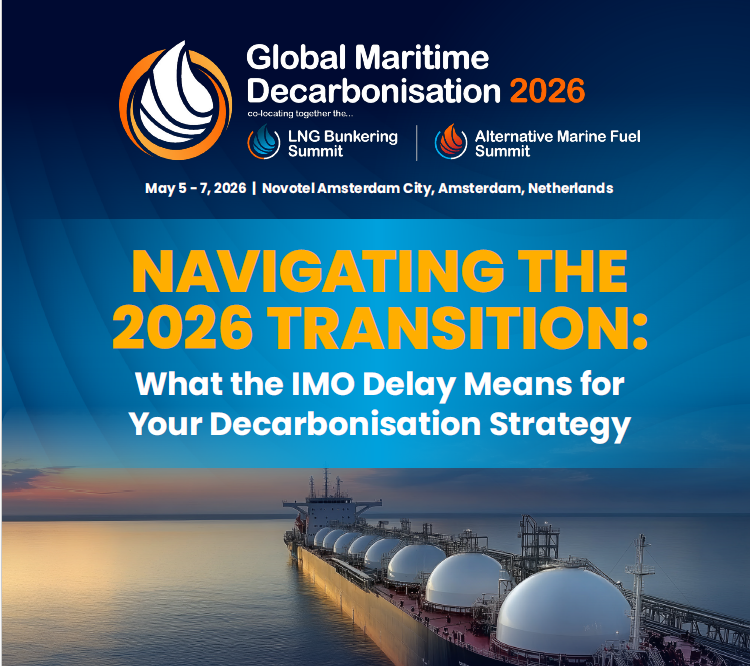
Fact Sheet | Navigating the 2026 Transition: What the IMO Delay Means for Your Decarbonisation Strategy
The IMO delay has not slowed decarbonisation – it has made the next 12–18 months more critical than ever.
With final decisions on the IMO Net-Zero Framework now pushed into 2026, maritime leaders are being forced to make fuel, fleet, and investment decisions without global regulatory certainty. Regional rules continue to tighten, compliance costs are rising, and the risk of stranded assets is growing.
This fact sheet provides a clear, practical guide to what the IMO delay really means, and how shipowners, ports, fuel suppliers, and financiers should respond now, not later.
Download to understand:
- What the IMO delay changes – and what it doesn’t – for your decarbonisation strategy
- The most likely regulatory scenarios between now and 2026, and how to prepare for each
- How to reduce commercial, compliance, and investment risk during a prolonged period of uncertainty
Make informed decisions before the rules are final. Download the fact sheet to understand the impact of the IMO delay, then join the leaders driving the transition in person at the Global Maritime Decarbonisation Summit 2026.

Report | The Global LNG Landscape Report 2026
The maritime industry is evolving. Are you ready for what’s next? Our brand-new mini-report on LNG availability and the transition to Bio-LNG and Green LNG gives you a front-row seat to the future of sustainable shipping.
This exclusive report dives into the key trends shaping the global fuel landscape; from fuel projections to decarbonization strategies, discover how LNG and its greener alternatives are transforming the industry.
Inside the Report:
- Market Trends & Trade Insights: Explore the latest LNG market shifts, global maritime trade patterns, and future fuel demand.
- LNG Bunkering Hotspots: Gain region-specific insights into LNG bunkering across Australasia, Asia, Europe, the Mediterranean, the Baltic, and North America.
- Decarbonizing the Great Lakes: Uncover the strategies and challenges in making the Great Lakes a greener, cleaner shipping corridor.
- Key Market Drivers: From regulatory changes and green corridors to LNG’s cost advantage and the impact of Russian fuel bans—understand what’s shaping the future of maritime energy.
This mini-report is a must-read for industry leaders, investors, and policymakers looking to stay ahead in the rapidly changing maritime fuel world. Download now and chart your course toward a more sustainable future!

Fact Sheet | The Calm Before the Storm: How to Be Set for Regulatory Changes (2025-2050)
Are you ready to navigate the wave of maritime decarbonisation? With the International Maritime Organisation (IMO) and the European Union introducing groundbreaking mid-term measures and fuel standards, staying ahead of these regulatory changes isn’t just an option – it’s a necessity.
This Fact Sheet dives deep into the key IMO and EU regulatory measures driving the transformation. With expert insights from Mark Watts, Director at LP Brussels, you’ll gain the tools to not only comply but thrive as the industry transitions towards a more sustainable and green future.
Key Features Include:
- Impacts on Emissions Reporting
- A Technology Roadmap
- Timeline of Key Dates and Deadlines Towards Net Zero
- Future-Proofing Maritime Operations
Download this Fact Sheet to learn more about:
- Upcoming regulatory shifts: Maritime operators will face greater compliance responsibilities as the industry moves towards decarbonisation.
- How to anticipate and adapt to change: Making informed decisions is crucial for the maritime industry as it plays its role in a cleaner, greener world.
- How to take a long-term approach: Be proactive and future-proof your organisation.

Interactive Magazine | The Decarbonisation Review | Volume 1
The maritime industry is at a turning point—and the time for action is now. With the IMO30 and IMO50 targets charting the path towards a sustainable future, the EU ETS and FuelEU Maritime regulations are set to fuel the urgency for change. By spring 2025, the IMO’s midterm measures will present bold new opportunities to innovate and lead the charge in the low-carbon era. While the road to decarbonisation is filled with challenges, the truth is clear: no one can tackle this alone. Collaboration across the industry is the key to navigating this transition successfully.
The Decarbonisation Review is a digital first-edition packed with powerful insights from the industry's most influential leaders who are paving the way for a greener maritime future. Inside, you'll find 4 exclusive interviews with key figures at the forefront of the decarbonisation movement:
- Rick Schiappacasse, JAXPORT, Jacksonville Port Authority: Reveals how JAXPORT is leading the charge in LNG bunkering and sustainable shipping practices
- Ilyas Muhammad, Head of Green Fuels, Hapag-Lloyd: Shares his vision for bio-LNG and e-LNG in Hapag-Lloyd’s transition towards greener fuels
- Javier Cervera, Head of Energy Transanition, Baleària: Explains how Spain is overcoming compliance challenges to stay ahead of evolving regulatory demands
- Mihaly Wekler, VP, Operations and Business Development, Anew Climate: Discusses the power of industry collaboration and collective action to accelerate maritime sustainability
Now is the time to take bold action, lead the way, and shape the future of maritime industry - downloading The Decarbonisation Review will equip you with the insights and strategies to not only meet the challenges ahead but to be at the forefront of redefining the industry for generations to come.
![[Updated October 2025] Infographic | From Waiting to Action: How the IMO’s Net Zero Review Will Redefine Maritime Progress](https://eco-cdn.iqpc.com/eco/images/event_content/fsarLIEsB9391xxuAUGQAHVUw2ChAYYE0UBuTAp5.png "[Updated October 2025] Infographic | From Waiting to Action: How the IMO’s Net Zero Review Will Redefine Maritime Progress")
[Updated October 2025] Infographic | From Waiting to Action: How the IMO’s Net Zero Review Will Redefine Maritime Progress
The IMO Marine Environment Protection Committee (MEPC) has now met, and the industry is waiting to hear what its October 2025 decision means for shipping’s path to Net Zero. As the Committee reviews the Net-Zero framework and the implementation of new carbon intensity measures, one thing is clear: the pace of maritime decarbonisation is about to accelerate.
To stay compliant and competitive, you need to know exactly what’s changing, when, and how it impacts your operations. This Decarbonisation Key Dates Timeline infographic lays it all out clearly, helping you prioritise near-term actions while preparing for the next wave of IMO-driven regulation.
This infographic will help you:
- Act with clarity: Understand what’s at stake following the IMO’s October 2025 decision and what it means for your compliance roadmap.
- Prioritise the urgent: Identify the key deadlines and measures likely to take effect first, before new rules are announced.
- Stay one step ahead: Prepare your strategy, budgets, and operations to align with the revised Net-Zero framework.
The decisions are being made, and the impact is coming. Use this timeline to understand what’s next for your organisation and chart your course through the next phase of maritime decarbonisation.

Infographic | The IMO's Mid-Term Measures: A Primer
Are you prepared for the IMO's mid-term measures?
The International Maritime Organization (IMO) is setting the course for maritime decarbonisation with its ambitious mid-term measures. As these regulations redefine emissions standards and compliance requirements, staying ahead is no longer optional—it’s essential.
This infographic focuses exclusively on the IMO's transformative mid-term measures, offering insights and strategies to help maritime operators navigate this pivotal shift in the industry.
Download this infographic to learn more about the IMOs:
- Net-Zero Goal: Aiming for net-zero greenhouse gas emissions by or around 2050
- Alternative Fuel Uptake: At least 5% - but striving for 10% - of energy used by 2030 to come from zero or near-zero greenhouse gas emission sources
- Carbon Intensity Reduction: A 40% reduction in carbon intensity by 2030

Infographic | Towards Net Zero: A Timeline of Key Dates and Deadlines
Stay ahead with our decarbonisation key dates timeline!
Navigating the maritime industry’s decarbonisation journey requires a clear understanding of critical deadlines. The International Maritime Organization’s (IMO) roadmap includes a series of milestones, each marking essential changes in emissions regulations and compliance requirements. This infographic highlights a traffic light-coded timeline, highlighting key decarbonisation dates to help you prioritise urgent actions while preparing for longer-term goals.
This infographic will help you to:
- Prioritise your efforts: Identify the most pressing deadlines and take immediate action where it’s needed
- Plan effectively: Leverage the timeline to develop a proactive decarbonisation strategy tailored to your operations
- Stay compliant and competitive: Ensure your organisation is prepared for each stage of the IMO’s decarbonisation agenda.
Download to discover more about:
- Urgent deadlines: Immediate regulatory changes you must address to remain compliant
- Upcoming milestones: Important mid-term measures requiring preparation to ensure smooth transitions
- Future goals: Long-term deadlines providing the industry time to implement sustainable strategies
Don’t wait for deadlines to catch you off guard. Use this timeline to steer your operations toward a sustainable future while staying ahead of regulatory changes.

Infographic | Navigating the Future: Key Technologies
Are you ready to embrace emerging decarbonisation technologies?
The path to maritime decarbonisation is being paved with groundbreaking technologies designed to meet the International Maritime Organization’s (IMO) ambitious sustainability targets. With new solutions emerging to support compliance with mid-term measures, now is the time to explore the innovations reshaping the industry.
Download this infographic to uncover:
- Technologies currently in development
- Technologies maturing in the next 5 years
- Fuel production technologies to watch
- Vessel design technologies in use
Discover the technologies that will shape the future of maritime sustainability and prepare your fleet for a greener tomorrow.

Infographic | How to Future-Proof Maritime Operations
The maritime industry stands at a crossroads—adapt now or face escalating risks. With stricter decarbonisation regulations on the horizon from the IMO and EU, companies can no longer afford to take a wait-and-see approach. Future-proofing your operations isn’t just about compliance, it’s about securing long-term success in an increasingly transparent and competitive market.
Download this infographic to learn more about:
- Why Transparency is Now a Business Imperative: Understand how increased scrutiny and reporting requirements impact your reputation and bottom line.
- The Role of Digitalization in Compliance & Efficiency: Explore how smart investments in emissions monitoring and reporting can streamline operations and reduce complexity.
- The Competitive Edge of Future-Proofing: See how modernising your fleet with low-carbon technologies can enhance profitability and minimise costly disruptions.
Don’t wait for regulations to catch up—download now and future-proof your maritime operations today!
In Partnership With:

QUESTIONS?
Address: IQPC Ltd, 129 Wilton Road,
London SW1V 1JZ
Telephone: +44 (0) 113 210 042
Fax: 44 (0) 207 368 9301
Email: enquire@iqpc.co.uk

©2026 IQPC. All rights reserved.