11-13th May, 2027
| Amsterdam
Interviews
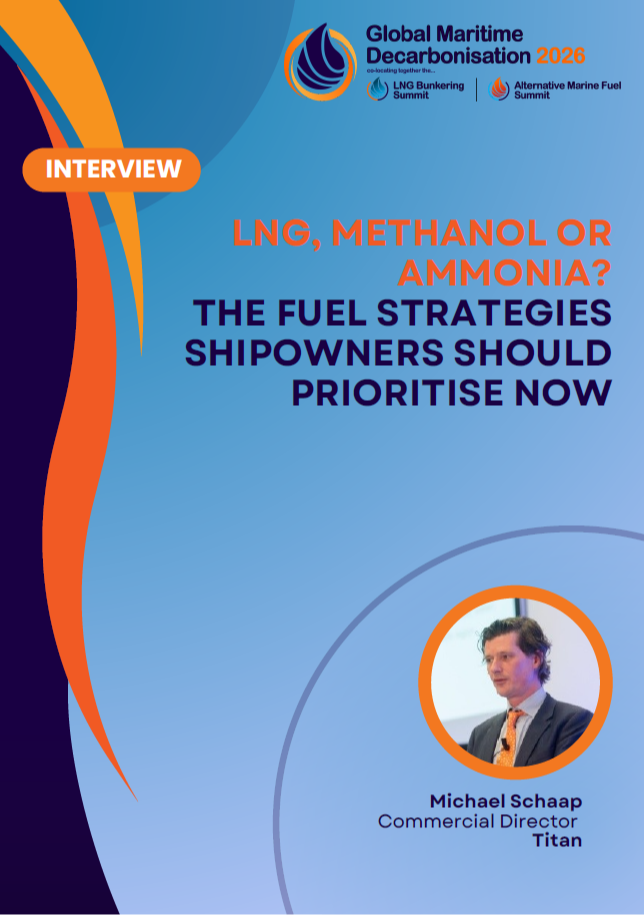
Interview | LNG, Methanol, or Ammonia? The Fuel Strategies Shipowners Should Prioritise Now
In this exclusive interview, Michael Schaap, Commercial Director at Titan, shares his perspective on one of the most pressing questions facing shipowners today: how to make confident fuel and infrastructure decisions while global regulation is still evolving.
Drawing on Titan’s experience at the forefront of alternative fuel bunkering, Schaap explores the commercial realities behind LNG, methanol, and ammonia adoption, and why the methane pathway continues to offer immediate decarbonisation opportunities.
From the implications of delayed IMO decisions to breakthroughs in methane-slip mitigation, this conversation offers a clear-eyed view of where the industry stands today, and where it is heading next.
Download the interview to learn more about:
- What shipowners should be doing in the next 6–12 months while global regulatory frameworks continue to evolve
- How new methane-slip mitigation technologies are strengthening the commercial case for LNG as a transition fuel
- Why a multi-fuel future is emerging, and how shipowners can structure strategies to avoid stranded asset risk
This interview is essential reading for the entire supply chain navigating the next phase of maritime decarbonisation – download now.
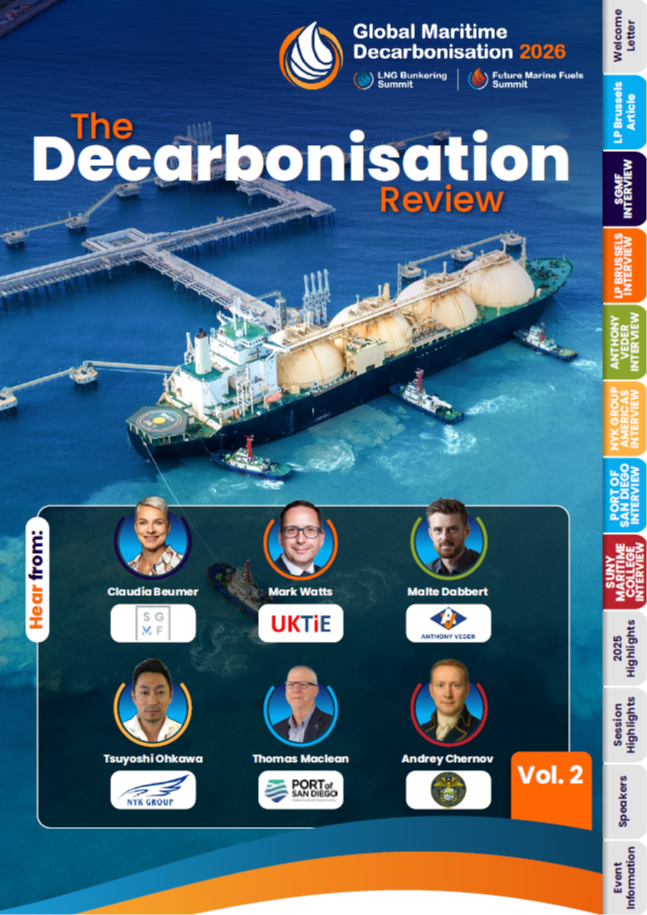
Interactive Magazine | The Decarbonisation Review | Volume 2
Clear Thinking for Maritime Decarbonisation in an Uncertain World
Global shipping is under pressure to decarbonise; yet regulatory clarity remains elusive. The Decarbonisation Review Vol. 2 delivers concise, expert insight into how the industry is responding now, despite delayed IMO decisions, fragmented regional rules, and rising compliance costs. Featuring perspectives from policymakers, shipowners, fuel specialists, ports, and academia, this edition focuses on what is commercially viable today, where risk is emerging, and why collaboration across the value chain is no longer optional.
Download to learn more about:
- How industry leaders are managing IMO uncertainty, EU ETS, and FuelEU Maritime
- Which fuel pathways and infrastructure investments make sense now, and which still carry risk
- Why collaboration across shipping, bunkering, ports, and finance is critical to accelerate decarbonisation
Expert Contributors Include:
- Mark Watts, Director, LP Brussels, previously CEO of the UK, Transport in Europe and former Two-Term Member of the European Parliament
- Claudia Beumer, Membership and Communications Manager, SGMF
- Malte Dabbert, Business Development Manager, Anthony Veder
- Tsuyoshi Ohkawa, Vice President of Business Development at NYK Group Americas
- Thomas Maclean, Policy Program Director, Port of San Diego
- Andrey Chernov, Adjunct Professor, SUNY Maritime College
Download The Decarbonisation Review Vol. 2 and gain the insight industry leaders are using to navigate risk, regulation, and fuel strategy today.
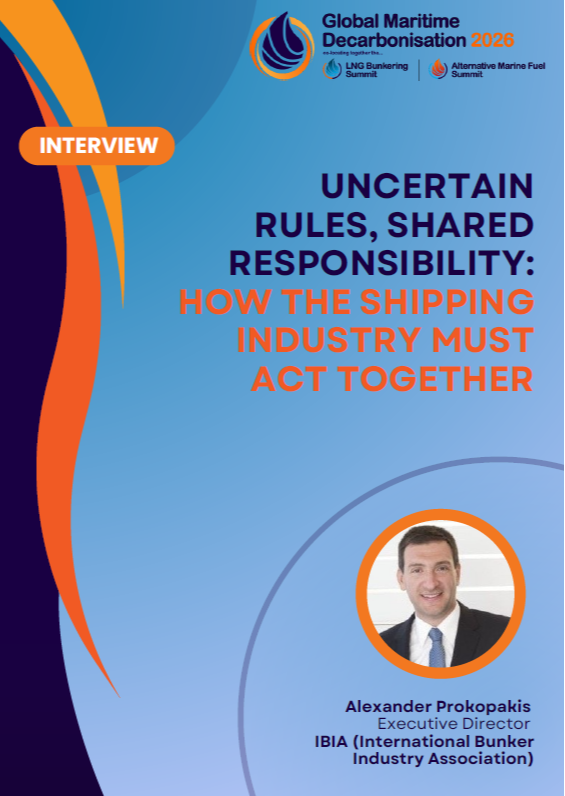
Interview | Uncertain Rules, Shared Responsibility: How the Shipping Industry Must Act Together to Decarbonise
The IMO may have delayed decisions, but the industry cannot afford to wait.
With the Net-Zero Framework postponed until 2026, the industry faces fragmented regulation, evolving fuel pathways, and growing compliance costs under EU ETS and FuelEU Maritime. In this exclusive interview, Alexander Prokopakis, Executive Director of IBIA, explains why the industry must take proactive, collective action to navigate uncertainty, manage risk, and accelerate decarbonisation.
From fuel quality and documentation to multi-fuel strategies, LNG’s evolving role, operational safety, and financing considerations, Alexander lays out the practical steps shipowners and stakeholders need to take today to remain commercially resilient while reducing emissions.
Download this interview to learn:
- The three priority actions shipowners should take in the next 6–12 months despite regulatory uncertainty
- How fuel quality, documentation, and flexible offtake strategies reduce operational and commercial risk
- Why safety, monitoring, and collaboration are the foundation for successful decarbonisation
Download the full interview to gain practical insights from IBIA – learn how shipowners, bunker suppliers, ports, and financiers are navigating regulatory uncertainty, managing risk, and accelerating decarbonisation. There is no time to wait, join the conversation now!
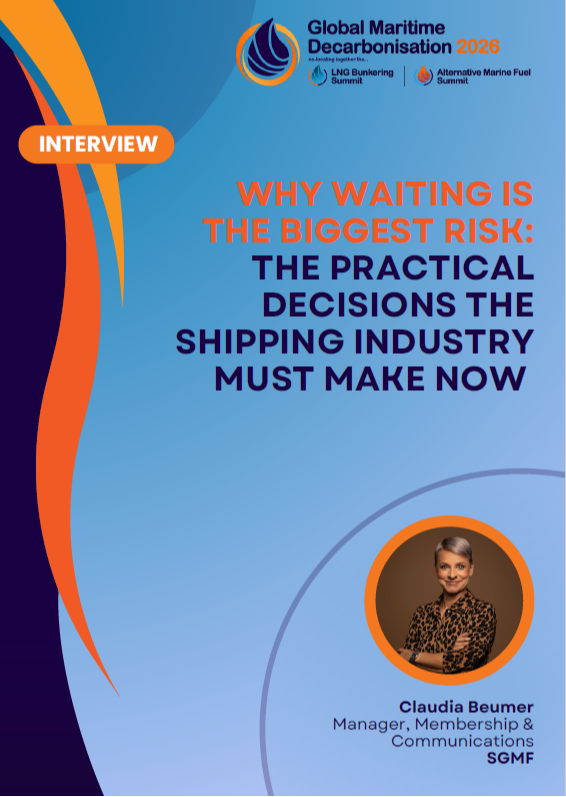
Interview | Why Waiting Is the Biggest Risk: What Practical Decisions the Shipping Industry Must Make Now
The IMO may have delayed clarity, but the industry cannot afford to delay action.
With global net-zero rules now pushed into 2026, shipowners, ports, and fuel suppliers are being forced to make high-stakes investment decisions without regulatory certainty. In this exclusive interview, Claudia Beumer, Manager, Membership & Communications, SGMF, cuts through the noise to explain what matters most right now: how to act, how to prepare, and how to avoid waiting for a “perfect” solution that may never come.
Drawing on SGMF’s frontline work with shipowners, ports, and regulators, this conversation explores LNG’s evolving role, multi-fuel strategies, port readiness, emissions measurement, and the practical steps required to minimise stranded-asset risk.
Download this interview to learn:
- How shipowners should act in the next 6–12 months despite delayed IMO decisions
- Why LNG remains a critical transition fuel, and how it enables future fuels
- What ports, operators, and investors must do now to prepare for a multi-fuel future
Want to take these discussions further? Join industry leaders, regulators, fuel suppliers, and financiers at the Global Maritime Decarbonisation Summit 2026, where these exact challenges, fuel viability, compliance risk, and investment strategy under uncertainty, will be debated and shaped in real time.
In Partnership With:

QUESTIONS?
Address: IQPC Ltd, 129 Wilton Road,
London SW1V 1JZ
Telephone: +44 (0) 113 210 042
Fax: 44 (0) 207 368 9301
Email: enquire@iqpc.co.uk

©2026 IQPC. All rights reserved.