AI in Energy Week Day Two - March 3, 2027
7:30 am - 7:55 am
Registration and Networking Breakfast
7:55 am - 8:00 am
Chair’s Grand Opening of Day 2
8:00 am - 8:30 am
Opening Keynote Address: Building the First AI Native Energy Enterprise: Aker BP's Vision for the Future of E&P
Paula Doyle -
Chief Digital Officer,
Aker BP
With production of more than 400,000 barrels of oil equivalent per day and ambitions to sustain production above 500,000 barrels per day into the 2030s, Aker BP is pursuing an equally ambitious digital vision: becoming the industry's first truly AI-first E&P company. This keynote explores how Aker BP is moving AI beyond isolated use cases and embedding it across workflows, decision-making and industrial operations, while maximizing existing technology investments and building a scalable foundation for an AI-first future.
• What it means to build an AI-first E&P company across complex, asset-intensive operations
• Moving from individual use cases to scalable AI agents and AI-enabled workflows across the business
• Unlocking greater value from existing data, software and digital infrastructure while building the foundations for future autonomous operations

8:30 am - 9:00 am
Building the AI Foundation: Data, Context and Knowledge for AI Driven Energy Operations
Learn how to build the data, knowledge, and contextual foundations needed to scale AI across the enterprise, enabling more accurate insights, trusted decision-making, and sustainable long-term value from AI investments.
9:00 am - 9:30 am
Panel Discussion: Building AI Native Enterprises from Governance, Ownership and Accountability at Scale
Nav Chawla -
Vice President & Chief Digital & Information Officer,
AdvanSix Inc
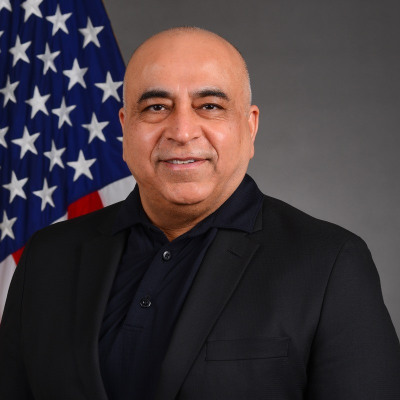
Deepak Sachdeva - Chief Information Officer, United States Air Force
As AI moves from experimentation into business-critical operations, organizations are being forced to answer fundamental questions around ownership, accountability and risk. Who owns AI? Who validates outputs? Who is responsible for governance, data quality and long-term maintenance?
This panel explores how organizations are creating governance frameworks that support innovation while ensuring human oversight, data integrity, regulatory compliance and operational accountability. Providing you practical insights into balancing speed, trust and control as AI becomes embedded across the enterprise.

9:30 am - 10:00 am
Interactive Discussion Groups
These interactive discussion groups are your opportunity to take part in facilitated group discussions with your peers. Choose the discussion group you would like to attend. Each run for 25 minutes.
Interactive Discussion Group A
9:30 am - 10:00 am How do you build an AI-ready workforce, upskilling teams for new ways of working? Dustin Corey - Manager of Application Development, Southern Company
Interactive Discussion Group B
9:30 am - 10:00 am How do you design robust AI infrastructure for energy that delivers reliability, scale, and automation? Jeremie Robbins - Manager, Cloud Operations, Crescent Energy
Interactive Discussion Group C
9:30 am - 10:00 am How can organizations measure the impact of AI on efficiency and performance? Peter Muehlebach - Manager, AI and Data Analytics, Chord Energy
Interactive Discussion Group D
9:30 am - 10:00 am Moving beyond the rollout, how do you make AI part of the way people actually work? Michael Casey - Manager, Everyday AI, Williams
9:30 am - 10:00 am
PLUS 4 FRESH-FOR-2027 INTERACTIVE DISCUSSIONS, ANNOUNCED IN JANUARY
AI is moving too quickly to lock every conversation in months in advance. Four additional Interactive Discussion Groups will be announced in January, dedicated to the hottest, most pressing topics shaping AI in energy operations in 2027, ensuring the agenda tackles the challenges and opportunities that matter most when we meet in March.
10:00 am - 10:30 am
Networking Break
Breakout Track - Autonomous Operations
10:30 am - 11:00 am
Panel Discussion: How Autonomous Can Energy Operations Really Become?
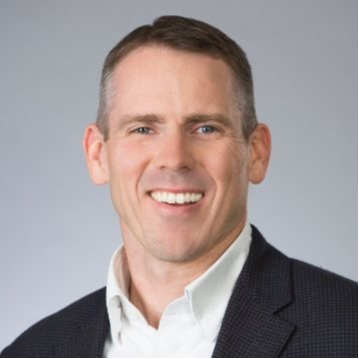
John Stretton -
Director of Process Automation,
EDP Renewables
Daniel Byrne - Senior Director, Digital Transformation, Marathon Petroleum
Daniel Byrne - Senior Director, Digital Transformation, Marathon Petroleum
As AI capabilities advance, the industry is moving beyond automation and toward increasingly autonomous operations.
This panel will explore where autonomous systems can safely and effectively take control, where human oversight remains essential, and what it will take to build trusted, governed, and scalable human-in-the-loop operating models.
Join industry leaders as they examine the future of autonomous control rooms, the safety and governance implications of AI-driven decision-making, and the roadmap toward greater operational autonomy.

Breakout Track - Data Foundations for Trusted AI
10:30 am - 11:00 am
Panel Discussion: Organizational Alignment: Who Owns AI & Data?
Harvinder Singh -
Staff Technology Engg Manager, Unified Data Platform,
bp
Swee-Teng Chin - Senior Data Scientist, Dow
Jason Gee - Manager, Data Science, ExxonMobil
Yvonne Wu - Director of Data, AI, and Digital Development, Ovintiv
Swee-Teng Chin - Senior Data Scientist, Dow
Jason Gee - Manager, Data Science, ExxonMobil
Yvonne Wu - Director of Data, AI, and Digital Development, Ovintiv
As AI adoption accelerates, organizations are grappling with a fundamental challenge: defining ownership, accountability, and governance across the AI lifecycle.
This panel will explore who should own AI initiatives, data, and outcomes, how responsibilities should be shared between business and technology teams, and what governance structures are needed to ensure AI systems are trusted, maintained, and scaled effectively across the enterprise.




Breakout Track - The AI-Enabled Workforce
10:30 am - 11:00 am
One Year Later: Lessons from Scaling AI Across Phillips 66
Kristine Swan -
Vice President, Digital Strategy & Innovation,
Phillips 66
With operations spanning refining, midstream, chemicals, marketing and renewable fuels, including 70,000+ miles of U.S. pipeline systems, 3.0 billion cubic feet per day of net natural gas processing capacity and 11 NGL fractionation plants, scaling AI across Phillips 66 means reaching people, processes and operational environments across an enormous and diverse industrial footprint.
One year after sharing the people strategies that enabled early AI adoption, Kristine Swan returns to the stage to share what happened next as AI moved from experimentation towards broader enterprise adoption.
This session explores the progress made, the challenges that persist and the lessons learned in building a workforce capable of operating and adapting alongside AI, from developing AI fluency and new skills to strengthening data ownership.

11:00 am - 11:30 am
Automating Inspections & Monitoring
Discover how AI, automation, and advanced monitoring technologies can reduce manual inspections, improve asset visibility, and enable safer, more efficient refinery operations.
11:00 am - 11:30 am
From Fragmented Data to AI-Ready Intelligence: Connecting, Contextualizing & Activating Operational Data
Discover how to break down data silos, connect operational and enterprise information, and create trusted, contextualized data that AI can turn into faster, more valuable decisions.
11:00 am - 11:30 am
Connecting Workers with Real-Time AI & Operational Intelligence for the Intelligent Frontline
Discover how AI-powered, real-time operational intelligence can give frontline teams greater visibility, strengthen decision-making and help workers respond faster and more effectively across complex operating environments.
11:30 am - 12:00 pm
Case Study: Building the Plant of the Future: From Digital Twins to Self-Optimizing Operations
Piya Dey -
Senior Director, Digital Manufacturing,
Celanese
The plant of the future will not simply predict what happens next. It will learn, adapt and take action to continuously improve performance. This session explores Celanese's journey toward predictable, self-optimizing manufacturing, using digital twins, AI agents, advanced analytics and contextualized operational data to enable more intelligent and increasingly autonomous operations.
• Building the digital foundation for the plant of the future
• Scaling digital twins across manufacturing operations
• Developing AI agents that deliver contextualized operational insights
• Moving from predictive intelligence to self-learning and self-adapting systems
• Enabling faster, more informed decisions while maintaining human oversight
• Creating a roadmap toward safe, scalable and increasingly autonomous plants

11:30 am - 12:00 pm
Case Study: Turning Data into Value: Prioritizing the Foundations for Scalable AI
Nick Davis -
Director of AI and Data Science,
ONEOK
As organizations look to scale AI beyond isolated pilots, success depends on having trusted, accessible, and well-governed data. This session explores how ONEOK is building the data foundations needed to support enterprise AI, from prioritizing high-value datasets and breaking down data silos to establishing governance frameworks that enable scalable, trusted AI adoption. Hear practical lessons on aligning data investments to business outcomes and creating the foundations required to unlock value across the organization.
• Identifying the datasets that unlock the highest-value AI use cases
• Prioritizing data investments to maximize business impact
• Building trusted and governed data foundations for AI
• Breaking down siloed data environments across the enterprise
• Aligning data strategy with AI adoption and business objectives
• Lessons learned preparing organizational data for AI at scale

11:30 am - 12:00 pm
Case Study: Taking AI Beyond IT: Building Business-Led AI Competency Centers
Jean-Thomas Meyer -
Head of Digital & AI,
Ørsted
As AI adoption accelerates, success depends not only on technology but on creating the organizational structures and ownership needed to embed AI across the business. This session explores how Ørsted is building business-led AI competency centres to move AI beyond the IT function, develop capabilities closer to where value is created, balance governance with innovation and accelerate adoption across teams.
• Why AI ownership must move beyond IT
• Creating business-led AI competency centres
• Balancing governance with innovation
• Building AI skills across the workforce
• Selecting the right AI models for different business functions
• Lessons from scaling digital transformation across the enterprise

12:00 pm - 12:35 pm
Lightning Talks
Join us for a dynamic round of innovative technology applications! Each session, lasting 10 minutes, will showcase cutting-edge innovations designed to enhance visibility, productivity, and efficiency. Don't miss this opportunity to explore the latest advancements and see how they can transform your operations.
Join us for a dynamic round of Lightning Talks showcasing innovative technology applications transforming autonomous energy operations.
12:00 pm - 12:10 pm
Combining Physics, Digital Twins & AI to Building More Reliable Intelligence for Energy Operations - Hosted by Ansys
Join us for a dynamic round of Lightning Talks showcasing innovative technology applications supporting data foundations for AI across energy operations.
12:00 pm - 12:10 pm
From Data Silos to Industrial Intelligence: Building the Data Foundation for AI
Join us for a dynamic round of Lightning Talks showcasing innovative technology applications transforming enabling the AI driven energy workforce.
12:00 pm - 12:10 pm
Capturing Critical Knowledge Before It Walks Out the Door
12:10 pm - 12:20 pm
Putting Agentic AI to Work Across Energy Operations to Move From Insight to Action
12:10 pm - 12:20 pm
Giving AI Context: Building Industrial Knowledge Graphs for Trusted Decision-Making
12:10 pm - 12:20 pm
AI-Powered Troubleshooting: Turning Industrial Knowledge into Faster Frontline Decisions
12:20 pm - 12:30 pm
Beyond Predictive Maintenance: Using AI to Understand Why Assets Fail & What to Do Next
12:20 pm - 12:30 pm
Connecting IT, OT & Engineering Data to Create a Unified Foundation for Industrial AI
12:20 pm - 12:30 pm
Augmenting the Industrial Workforce & Putting AI into the Flow of Work
12:35 pm - 1:25 pm
Networking Lunch
Breakout Track - Strategy, Governance & Responsible AI
1:25 pm - 1:55 pm
Fireside Chat: Securing AI in Mission-Critical Operations: Balancing Innovation, Cyber Risk & Control
Thomas Strete -
Senior Director, Digital Infrastructure,
Marathon Petroleum Corporation
As AI becomes integrated into operational environments, organizations must protect critical infrastructure while enabling innovation at speed.
This fireside chat explores how leaders are managing AI-related cyber risks, securing IT and OT environments, governing the use of AI in high-consequence operations, and building the controls needed to deploy AI safely and at scale.
Breakout Track - Enterprise AI
1:25 pm - 1:55 pm
Panel Discussion: Why Do AI Pilots Still Fail? Separating Experimentation from Enterprise Value
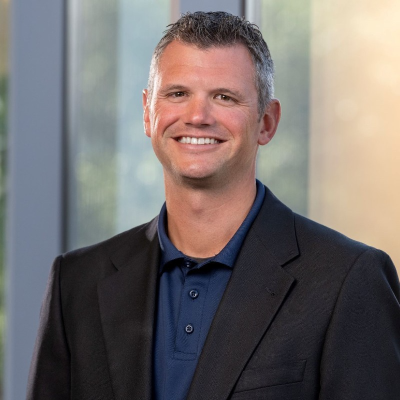
Brandon Croley -
Head of Artificial Intelligence,
Williams
Sravanthi Yerroju - Director Enterprise AI, Pattern Energy
Kishore Koduri - Director, Enterprise Platforms, Architecture & Engineering, FirstEnergy
Vasileios Geroulas - Director, IT Digital Transformation, DTE Energy
Sravanthi Yerroju - Director Enterprise AI, Pattern Energy
Kishore Koduri - Director, Enterprise Platforms, Architecture & Engineering, FirstEnergy
Vasileios Geroulas - Director, IT Digital Transformation, DTE Energy
Most organizations have run AI pilots, but far fewer have successfully scaled them into day-to-day operations.
This panel explores why promising initiatives become trapped in pilot purgatory, the challenges around funding, sponsorship and adoption, and what leading organizations are doing differently to turn experimentation into measurable business value.




1:55 pm - 2:25 pm
Case Study: Protecting AI-Enabled Operational Environments: Managing Risk Across IT, OT and Agentic AI
Kristi Cook -
Director of Global IT/OT Cyber Security,
Peabody Energy
Operating mining assets across the U.S. and Australia and serving power and steel customers in more than 25 countries across six continents, Peabody operates within complex, safety-critical industrial environments where the consequences of technology and cybersecurity risk extend directly into operations. As AI becomes increasingly embedded across these environments, this session explores how Peabody is strengthening the cybersecurity foundations needed to support AI adoption while preparing for emerging risks around AI agents, autonomous workflows and increasingly connected IT and OT systems.
• Building the cybersecurity foundations required for AI at scale
• Managing IT, OT and AI convergence risks
• Identity and access management for AI systems and agents
• Creating guardrails for AI-enabled operational workflows
• Preparing for emerging risks associated with agentic AI and autonomous systems

1:55 pm - 2:25 pm
Case Study: Scaling AI Across 97 Business Units: Building the Operating Model to Move from Pilot Enterprise Adoption
Mark Lesiw -
Head of AI Enablement,
Xcel Energy
Operating across eight U.S. states and 97 business units, Xcel Energy has scaled its enterprise AI programme from 1,500 licensed users to more than 9,000, with mature cohorts achieving over 90% active usage. Moving beyond simply providing access to AI, this session explores how Xcel Energy built the operating model needed to embed it into day-to-day work through executive sponsorship, structured onboarding, community building and a network of AI champions.
• Expanding AI adoption from 1,500 to 9,000+ users across the enterprise
• Building a network of AI champions across 97 business units
• Creating an AI operating model spanning governance, prioritization and delivery
• Using structured onboarding and community-building to accelerate adoption
• Measuring AI value through productivity gains and business outcomes
• Lessons learned scaling AI from individual experimentation to enterprise capability


2:25 pm - 2:55 pm
Case Study: Governing Agentic AI: Building Trust, Control and Accountability into Autonomous Systems
Sathish Kuppuswamy -
Director of Cybersecurity Architecture Engineering & Operations,
Pacific Gas and Electric Company
Operating critical electric and natural gas infrastructure across most of Northern and Central California, PG&E is exploring AI within an environment where trust, control and accountability are fundamental to safe and reliable operations. As organizations begin deploying AI agents and autonomous workflows, traditional governance models are being pushed to their limits.
This session explores how PG&E is approaching the foundations required for agentic AI, from semantic layers and knowledge graphs to observability, evaluation frameworks and human-in-the-loop controls, ensuring increasingly autonomous systems remain trustworthy, measurable and aligned to business value.
• Building governance frameworks for agentic AI and autonomous workflows
• Using semantic layers and knowledge graphs to create trusted AI foundations
• Measuring, monitoring and evaluating agent performance
• Human-in-the-loop controls and risk management
• Creating accountability and observability across AI systems
• Linking AI governance to measurable business value and ROI

Sathish Kuppuswamy
Director of Cybersecurity Architecture Engineering & OperationsPacific Gas and Electric Company
2:25 pm - 2:55 pm
Case Study: Building vs Buying AI: Creating Internal Capability Without Creating Technical Debt
Petros Paterakis -
Director, Performance Analytics,
RWE
With approximately 49.5 GW of generation capacity, including almost 22 GW of renewables, RWE operates across a large and diverse asset portfolio where digital solutions need to be scalable, maintainable and capable of supporting very different operational needs. As AI-powered development tools make it increasingly possible for engineers and domain experts to build applications themselves, organizations face a new question: what should we build internally, and what should we buy?
This session explores how organizations can accelerate innovation through AI-assisted development while making disciplined build-versus-buy decisions and ensuring internally developed solutions do not create tomorrow's technical debt.
• Using AI-assisted development to rapidly build operational tools and applications
• Turning engineers and domain experts into application builders through low-code, no-code and AI-enabled development
• Developing practical build-versus-buy frameworks for AI initiatives
• Establishing ownership, governance and maintenance models to avoid technical debt and support long-term scalability

2:55 pm - 3:10 pm
Afternoon Break
3:10 pm - 3:40 pm
Case Study: From AI Possibility to Practical Application: Turning the "Why" into the "How"
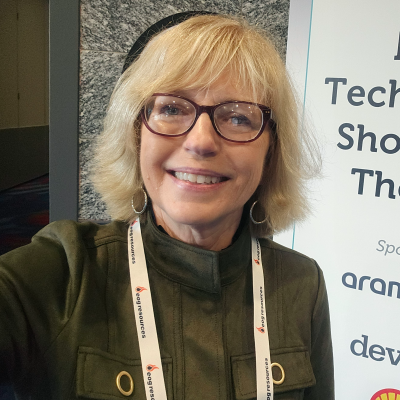
Susan Nash -
Director of Innovation and Emerging Science and Technology,
American Association of Petroleum Geologists (AAPG)
After three days of AI use cases, technologies and lessons learned, the final challenge is turning those ideas into action. Drawing on real-world energy use cases, this case study will break down how to identify the right business problem, bring together the right data and expertise, select the appropriate AI approach and build a workflow that delivers a meaningful outcome
• Start with the "big why": defining the operational problem, desired outcome and value before deciding where AI fits
• Build the right workflow: combining prompts, model selection, proprietary and public data, and human expertise to move from question to trusted output.
• Turn AI into something people can actually use: breaking down data and team silos, validating outputs and creating a repeatable framework that can be applied to real operational challenges.
Susan Nash
Director of Innovation and Emerging Science and TechnologyAmerican Association of Petroleum Geologists (AAPG)
3:40 pm - 4:10 pm
Panel Discussion: The Road Ahead: What's Next for AI in Energy Operations?
Michael Thompson -
Vice President & Chief Information Officer,
Gulfport Energy Corporation
Matthew Alberts - Manager, Innovation and Emerging Technologies, Southern Company
AI is no longer confined to pilots or proof-of-concepts, it's increasingly being deployed to improve how assets are operated, maintained and optimised across the oil and gas value chain. As technologies such as AI agents, autonomous operations, digital twins and computer vision continue to mature, what should operations leaders be preparing for next? Following three days of practical case studies and implementation lessons, this closing panel will explore the technologies, trends and capabilities set to shape the next phase of operational excellence.
• Which AI technologies are already delivering measurable operational improvements, and which are still some way from enterprise adoption?
• How will AI agents, copilots and autonomous systems reshape the way operators, engineers and frontline teams work?
• What role will digital twins, real-time operational data and physics-based models play in the next generation of operational decision-making?
• How are technologies such as computer vision, robotics and autonomous inspection transforming asset reliability, maintenance and field operations?
• Which emerging AI capabilities have the greatest potential to improve safety, reliability, production and operational efficiency?
• What organisational, data and governance challenges must organisations overcome to scale these technologies successfully?


4:10 pm - 4:40 pm
The Next Frontier of AI in Energy: From Machine Learning to Quantum Computing
Jason Howard -
Vice President, Planning,
NOV
As AI continues to move from experimentation into measurable business impact, what comes next for energy operations? This session will explore the evolution from traditional forecasting and machine learning to emerging technologies such as quantum computing, drawing on real-world experience of where ML is already delivering tangible operational and financial value and what could come next through quantum forecasting, optimisation and advanced computing.
Session Takeaways:
• Where machine learning is delivering measurable value today, particularly across forecasting and optimisation
• What emerging approaches such as quantum forecasting and optimisation could unlock next
• Separating the practical potential of quantum computing from the current hype and limitations
• How energy companies can prepare now through better data, algorithms and operational capabilities
• What the next generation of AI and advanced computing could mean for operational decision-making

4:40 pm - 4:50 pm
2027 AI in Energy Week Closing Reflections: Lessons Learned, Priorities Identified, Actions Required
After three days of case studies, implementation lessons and candid discussions, this session reflects on the habits, investments, technologies and operating models that energy companies should stop, start and continue as they scale AI across the enterprise.